Neelam Modi Jain
njm2180@gsb.columbia.edu
Why do some neighborhoods generate more economic activity than others?
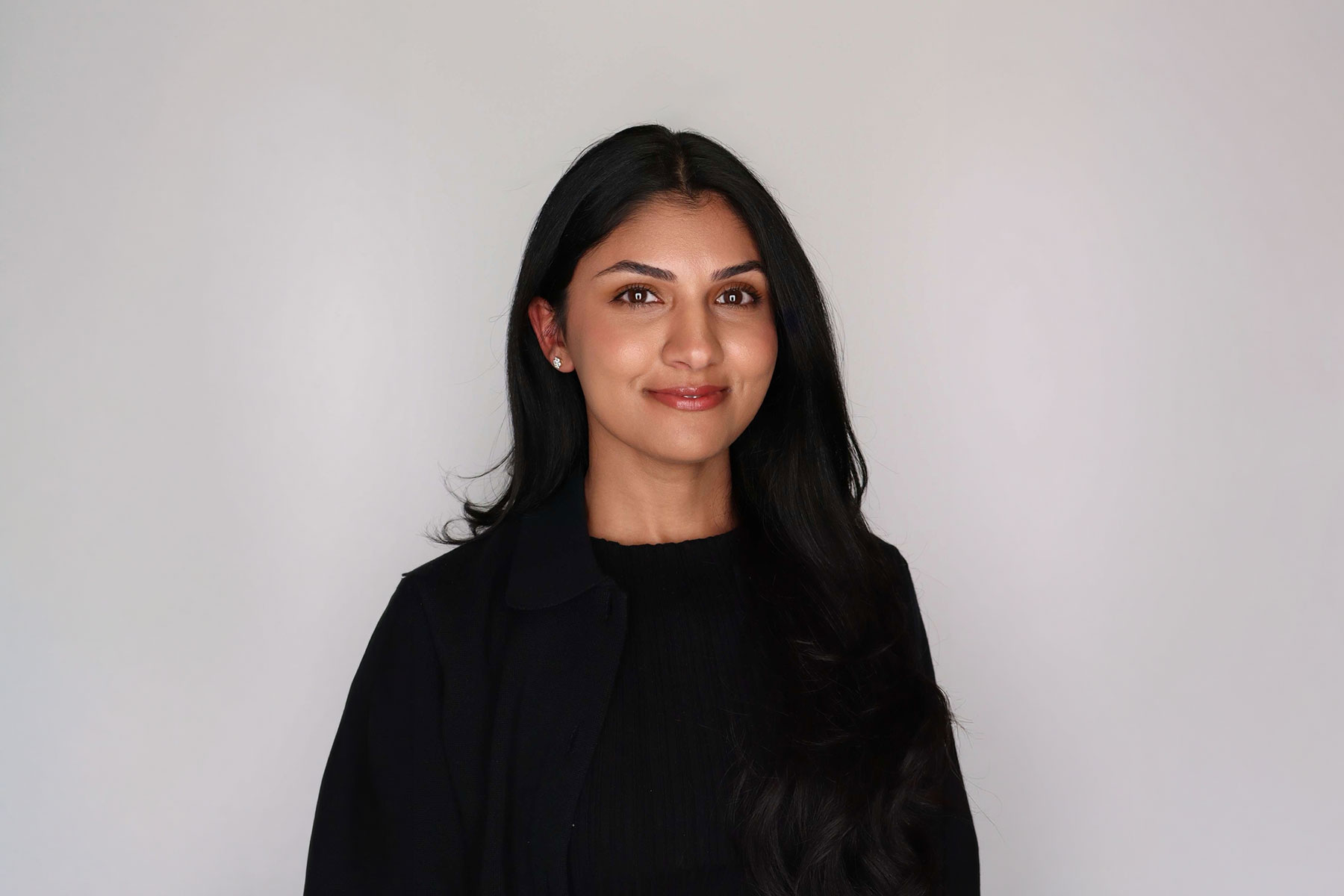
I’m Neelam, a postdoctoral researcher in the Management Division at Columbia Business School and the Tamer Institute for Social Enterprise and Climate Change. I will be on the Fall 2027 academic job market.
My research sits at the intersection of networks, geography, and entrepreneurship. I study how connections at the neighborhood level help explain persistent economic and spatial inequalities. My findings speak to entrepreneurs deciding where to start a business and to local governments deciding where to invest in economic development.
Since 2024, I have also worked as an adjunct lecturer in Northwestern University’s School of Professional Studies, teaching an annual course on ‘Leveraging & Learning from Networks’. My teaching inspires my second line of research on how students think and learn when using AI to prepare for class.
I earned my Ph.D. in Industrial Engineering and Management Sciences from Northwestern University and B.S. degrees in Biomedical Engineering and Economics from UNC Chapel Hill and NC State. Prior to joining academia, I worked in strategy at Deloitte Consulting.
RESEARCH
I. Neighborhood Connectedness and Economic Inequality
What is a connected neighborhood? A framework and application to local economic activity. (With Jorge Guzman and Mario Small). In preparation for submission.
Connectedness is often treated as one thing – a good thing. This paper distinguishes between five forms of “connected” neighborhoods, builds an index for each for 65,000+ U.S. neighborhoods, and tests whether each differently helps (or hurts) local business and labor market indicators.
Neighborhood visits generate startup activity. (With Jorge Guzman and Mario Small). In preparation for submission.
Do increases in the number of people visiting a neighborhood from elsewhere lead to more new businesses? I build a national monthly measure of incoming visits for over 40,000 U.S. neighborhoods and causally link it to state business registrations.
II. Generative AI and Student Learning
Voice-based debate with an AI adversary is associated with increased divergent ideation. (With Dan Wang). Under review. [Preprint] [Press]
Across 957 debates between MBA and EMBA students and an AI adversary, spoken conversations were longer and more repetitive but covered a wider range of ideas than typed ones. Concerns that AI narrows human thinking may depend partly on the interface through which people use it.
How assigned AI use before class shapes active student engagement in class. (With Dan Wang et al). Under review.
Preregistered field experiment: Does access to a pedagogically-trained AI discussion partner built into the course change intermediate student learning outcomes such as in-class participation, comfort speaking up, focus, and motivation? [Preprint]
For a complete list of publications, see my CV here.
TEACHING TOOLS
CAiSEY
AI discussion partner developed to support student critical thinking, confidence, and deeper engagement with case-based course content. Try a demo here!
6-DoS: Six Degrees of Separation
Can you relay a message to someone outside of your network in 6 steps or less? Interactive web-based exercise that enables students to experience a key concept in social network analysis: cognitive social structures (CSS). Try it here!
Six degrees of separation: An interactive teaching activity for social networks. (With Kyosuke Tanaka, Harshad Gado, and Noshir Contractor). Published in Connections: https://doi.org/10.2478/connections-2026-0010
Network Strengths Survey
Like the famous “StrengthsFinder” activity, but for personal networks. Why? Because it’s important to leverage your network, but you don’t want to become overly reliant on any one person. Try it here!

